DOAS System Design


The most common drivers for choosing a dedicated outdoor air system (DOAS) are to:
Incoming ventilation air typically carries more than 80% of a building’s annual dehumidification load. Most traditional air handling systems cannot handle such high latent loads over a wide range of ambient conditions.
DOAS equipment is designed for high latent loads.
However, these loads must be considered when designing a DOAS unit to meet specific application requirements. Read on to learn how using the dehumidification design day ensures desired space conditions are met, why a dedicated dehumidification control mode is important, and how DOAS units are rated by AHRI.
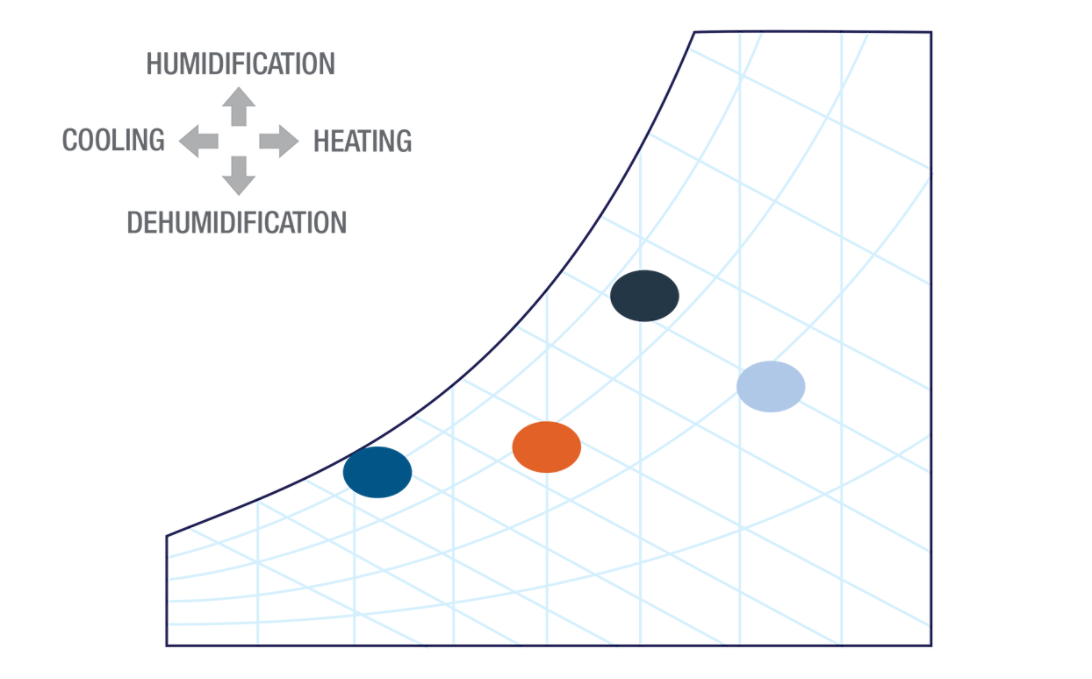
When designing a high outdoor air system, both design cooling conditions and design dehumidification conditions must be considered.
Designing just for temperature can result in not meeting desired conditions and can lead to mold, structural degradation, and poor indoor air quality caused by excessive moisture in the space.
Consider the following example:
Design for Dehumidification
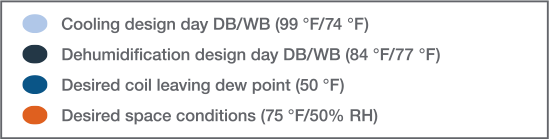
Desired space conditions of 75°F / 50% RH.
System can maintain temperature and humidity setpoints!
Design for Cooling
Desired space conditions of 75 °F/50% RH.
System can maintain desired space temperature but on humid days, space humidity is above the setpoint.
ASHRAE 62 (5.10)
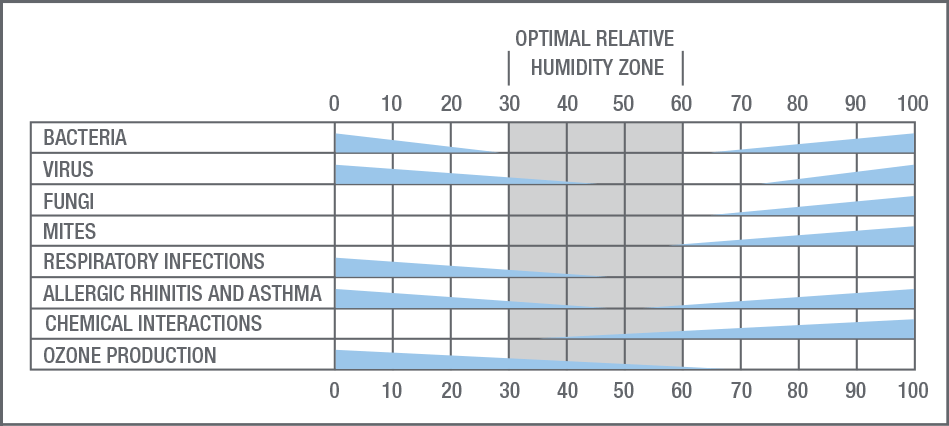
Keeping space conditions cool and dry is far easier than trying to regain control of an overly humid space when introducing high amounts of outdoor air. Systems that simply control the leaving air temperature, or use cooling mode to dry the air, cannot meet or maintain desired space temperature and relative humidity.
Ensuring proper humidity levels requires a separate dehumidification mode that measures actual dew point off the coil.
A dedicated dehumidification control mode recognizes when humidity conditions are changing and moves the control point to a dew sensor measurement off the coil.
Cool, dry air is then reheated using the free energy of hot gas reheat.
Dehumidification mode can be activated based on either outdoor or space conditions.
Choose Outdoor Air for Applications with:
Choose Space/Return Air Conditions for Applications with:
In many climates, dehumidification mode comprises the majority of DOAS annual operating hours.
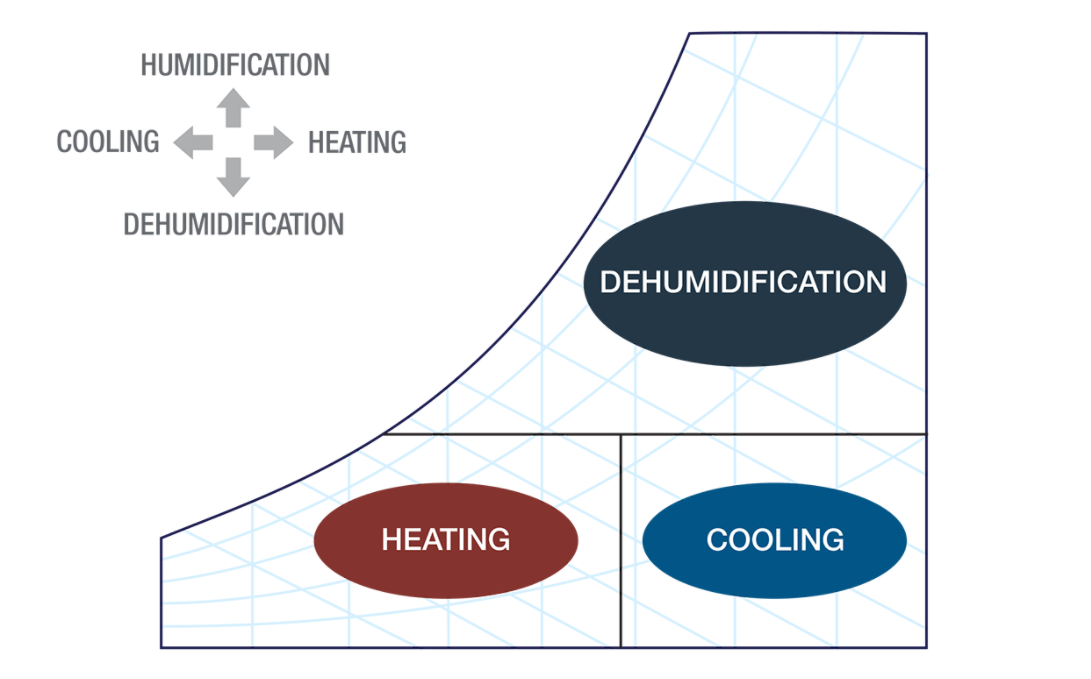
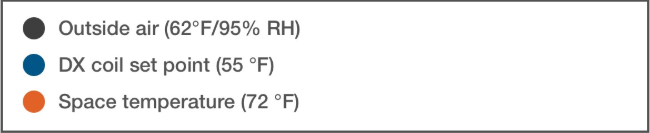
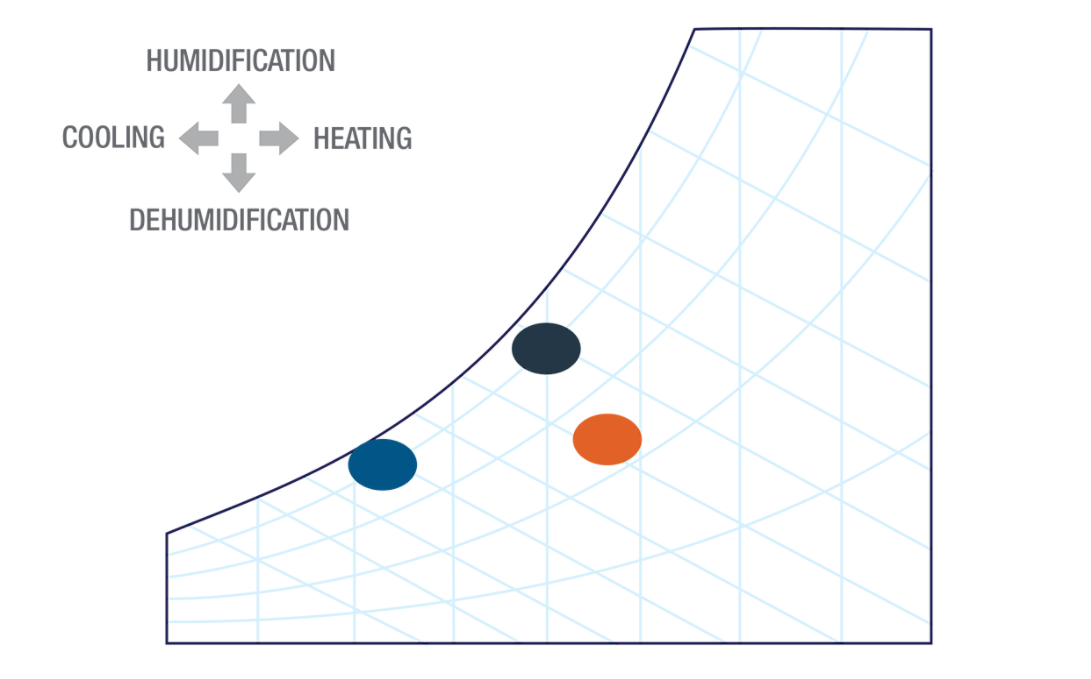
While design days create challenges for both temperature and humidity control, the more frequent part-load days present a different challenge.
For example, cool, dewy summer mornings require dehumidification to dry out the incoming air, but using cooling mode to dry already cool air will result in spaces that are too cold.
Instead, dehumidify to the right dew point and then use reheat to deliver comfortable temperature and humidity levels to the space.
Options for Part-Load Operation
Unacceptable space humidity
Over-cooled space
Dries air to the proper humidity level
Uses reheat to maintain proper space temp (with hot gas reheat and/or downstream duct heater)
For many years, the performance of rooftop HVAC units has been evaluated and rated by the Air Conditioning, Heating and Refrigeration Institute (AHRI). However, most standards have been focused on sensible performance, making DOAS performance difficult to evaluate. The current AHRI 920 standard now makes DOAS testing and certification much more applicable.
Products eligible to be evaluated to AHRI 920 are those that dehumidify "100% outdoor air to a low dew point and include reheat that is capable of controlling the supply dry-bulb temperature."
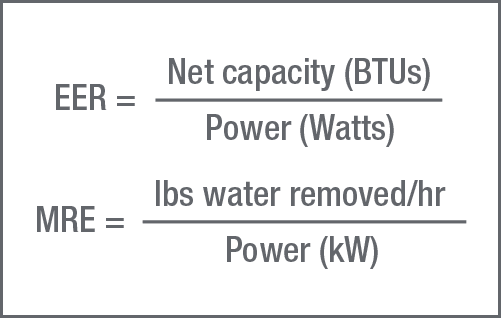
AHRI 340/360 measures the efficiency of recirculation units with EER and IEER ratings
AHRI 920 measures unit effectiveness in terms of water removal with MRE and ISMRE ratings
AHRI 920 is intended for dedicated outdoor air systems.
Learn More about Valent's DOAS Solutions